If you’re lucky enough to have unwrapped a new iPhone as a holiday gift this year, you’ll probably want to install some new apps on it. Fortunately, we’re here to help with some suggestions. We’ve divided them into two types: great apps that are just generally fun or useful to have on your phone, and apps that you should download to replace the default ones that Apple ships on your iPhone.
We’ve rounded up our favorite and most-used games, apps, and entertainment. Check out our app picks for iPhones, Android phones, PCs, Macs and TVs; our favorite mobile games from Apple Arcade and Google Play Pass; and our top choices for gaming PCs, the PS4, Xbox One, and Nintendo Switch. We’ve also listed our favorite streaming shows on Disney+, Hulu and Netflix, some great sci-fi books, and exciting new podcasts. (Note: pricing was accurate at the time of publishing, but may change.)
TikTok
The internet cultural sensation of 2019 and source of some of the best internet memes and videos ever made. In other words, it’s the most fun place on the internet right now. The app makes it easy to join in and endlessly scroll through amusing clips (or even create your own viral sensation).
Tweetbot
Twitter is a vaguely terrible way to spend your time these days, but if you (like me) can’t tear yourself away from the social media service/entryway into hell, you’ll want Tweetbot, which actually makes using Twitter far less painful. Tweetbot shows you the tweets of the people you follow, in the order that they tweeted them. There are no ads or promoted tweets, powerful mute filters to block out unwanted noise, and (thanks to Twitter’s unfriendly API changes) no notifications to constantly ping you to come back to the app.
Paprika Recipe Manager
The internet is basically the best cookbook ever made, with recipes for whatever dish, dessert, or drink you want to create just a click away. Paprika lets you paste in links for those recipes, pulls out the crucial information (ingredients, directions, servings) from the sometimes endless stories and histories that food blogs insist on including, and saves the info in your own digital cookbook to pull up whenever you need it.
Halide Camera
The cameras on the new iPhones are better than ever before, and a lot of that is thanks to the helpful AI-powered algorithms that work to perfect your shots. If you have a little more photographic know-how, though, you might want an app like Halide, which is designed to let you push the cameras to the limit.
Authy
Security time! Do you secure your internet accounts with two-factor authentication? If so, great; Authy is the app you’ll want to use for authentication codes. If not, GO SET UP TWO-FACTOR AUTHENTICATION NOW! And when you do, use Authy, which does a better job of storing and keeping track of all those authentication codes than other apps like Google Authenticator.
Lastpass / 1Password
Speaking of internet security, you should probably start using a password manager instead of just entering the same password for all your accounts. LastPass and 1Password are the two best options around, each with different pros / cons and costs. Setting up a new phone is the perfect time to set up some more security. Check out our full guide here for more details.
Microsoft Outlook (instead of Apple Mail)
Apple’s default Mail app for email is still just plain bad. The UI is unwieldy and support for Gmail is still poor enough in 2019 that you should install a different email app instead. Of those, Outlook for iOS is still one of the best options around, with useful features, a fast UI, and Microsoft support that means it’ll be around for years to come.
Google Maps (instead of Apple Maps)
Apple has actually updated Apple Maps in iOS 13 (which is almost certainly already installed on your new phone), and it’s probably the best it’s ever been. That doesn’t matter, because odds are that you will move it to a folder and use Google Maps anyway, because you’re the kind of person who doesn’t like getting lost on your way to wherever it is you’re going.
Venmo (instead Apple Pay)
Whether you’re splitting the internet bills with roommates or splitting a tab at a bar, everyone has to pay someone else back at some point. Venmo makes it simple, easy, and secure — and unlike Apple Pay, it works on things that aren’t iPhones, too.
Google Photos (instead of Apple Photos)
Apple Photos is the default photo app, and you’ll likely never replace it since that’s where all the photos you take go. But you should set up Google Photos anyway, which backs up all your pictures and videos for free. True, they might not be saved in the highest quality, but it’s better than no backup at all, and when it comes to all your favorite pictures, why take the risk?
Fantastical 2 (instead of Apple Calendar)
Apple’s default Calendar is fine for basic tasks, but if you want something a little more powerful, get Fantastical. Yes, it does cost actual money, but you’ll get a UI that’s far more useful on a phone screen than Apple’s own, along with Fantastical’s excellent contextual cues that can automatically add details like dates or locations when you’re adding new events. It also has a truly excellent widget that’s far better than the default calendar app’s.
Otter (instead of Voice Memos)
This is a bit more of a niche category, but if you record a lot of voice notes on your iPhone (maybe you’re a student who wants to play back lectures, or a technology reporter who needs to interview people from time to time), then you’ll want Otter.ai. It’s an AI-powered voice recording app that live transcribes things as you talk, and stores it all in the cloud to access from anywhere. It comes with 600 minutes of transcription free per month, too, which should be plenty for most people.
Vox Media has affiliate partnerships. These do not influence editorial content, though Vox Media may earn commissions for products purchased via affiliate links. For more information, see our ethics policy.
And we're back! Hopefully everyone is enjoying the holidays while we continue our year-in-review series of articles looking back at 2019 and forward at what's in store next year. Right now, though, the only thing I'm looking forward to is The Mandalorian finale on Disney+.
After years of teasing, VR might be ready for the big time. The path from expensive niche for hardcore enthusiasts to mainstream acceptance is getting clearer thanks to the new Oculus Quest and Valve's Half-Life: Alyx game. Devindra Hardawar explains all the reasons VR will be easier to experience in 2020.
What do Engadget readers think of products like the Roomba iRobot i7, Pixel Slate, Nest Hub and Sega Dreamcast? Find out all of that and more with these, the best user-submitted reviews of 2019.
That Ford's hot hatch isn't available in North America was already bad enough -- and that was before we heard a rumor that its next generation may include a hybrid option. According to the Car Magazinereport, it would combine a 400HP engine connected to the front wheels, with an electric motor in the back for better traction with smarter torque vectoring.
All products recommended by Engadget are selected by our editorial team, independent of our parent company. Some of our stories include affiliate links. If you buy something through one of these links, we may earn an affiliate commission.
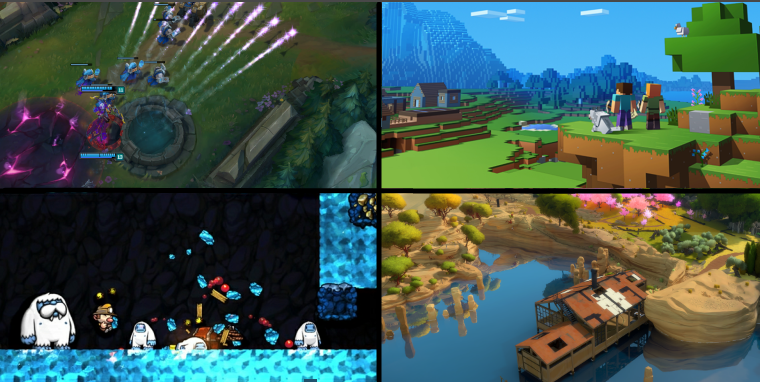
Enlarge/ Very nature-oriented color scheme to our 2010s video gaming favorites.
Microsoft / Jonathan Blow / Riot Games / Derek You
As the 2010s come to a close, looking back on the thousands and thousands of video games that were made over the last ten years is a daunting task. It's so daunting, in fact, we need a little more time—we'll be narrowing down that massive list to a selection of the most important games of the decade in the near future.
In the meantime, though, we thought it would be interesting to poll the Ars Brain Trust for some more personally relevant "Game of the Decade" picks. These titles might not rank as the objectively best games of the decade, or the most innovative, or influential, or even the most well-made. But each one stands out to a member of our staff as the most memorable and impactful gaming experience of the last ten years; the one that meant the most to us for one reason or another.
The results run the gamut from 100-hour epics to mindless mobile phone time-wasters, and everything in between. It may not quite form a comprehensive accounting of the decade in games, but altogether and individually, these are the titles that will stick with us most when we look back on the 2010s.
The Binding of Isaac is a game about a boy named Isaac fleeing into his basement to escape his mother, who has been convinced by religious television that Isaac is an unrepentant sinner who must be murdered. Isaac delves deeper and deeper into the labyrinth under his house, eventually somehow making it into his mother’s womb—and then Hell itself—while shooting at piles of poop and distorted visions of his own psyche. His weapon is his own tears. The game is full of hopelessly dated memes and endless toilet humor.
Look, I don’t love that this is my favorite game of the decade, but sometimes a game chooses you.
The Binding of Isaac (including all of its DLC, of course) has been my gaming comfort food since it got its hooks into me in 2014. I love the sense of progression you get from a good RPG, and with the Binding of Isaac, I can feel that power curve rev up to ridiculous levels in less than an hour, as many times as I want. The game’s huge variety of items—and the way they interact in unique and interesting ways—is still unmatched in modern roguelikes. No two runs ever play the same. Sometimes RNG is a pitiless god who saddles you with a lousy loadout you have to do your best with, and sometimes (OK, often) you become a disgustingly overpowered hurricane of destruction.
There’s no game I’ve put more hours into (no, I will not be checking my “Wasted on Destiny” stats), and I can’t imagine a time I won’t want to return to it for just one more run.
In 2011, after months of hectoring from my spouse and a friend, I caved and tried Mass Effect. They were right, of course; I loved it and quickly dove into ME2 after. But then I hit a wall: it would be months before the third game came out, and I desperately wanted something to scratch that itch. So when I found this game on sale called Dragon Age 2 from the same studio, I figured for $15 it was worth trying.
I played it. Then I immediately played it again. And a third time. A different Hawke every time, following the script in this three-act play, this three-season TV arc doomed to a tragic ending. I was basically in love with it both despite and because of its flaws, in the same way my fannish heart fell in love with Star Wars in my teen years or Lord of the Rings in college. I wanted to talk about it, with everyone, all the time—so I took to my little blog to do just that.
The big surprise? Finding that people were listening. Suddenly, my name was out there. The rest was luck: lightning struck and the universe miraculously developed open full-time game journalist jobs at exactly the same time. I got hired into one and quit my office job in Feb. 2012, and I've had the incredible good fortune to be working as a full-time journalist ever since.
All the negative arguments about backgrounds, assets, and combat in DA2 are valid, but they never meant a damn thing personally. To me, the game was and is all about the stories, the people, and the world in which they are trying to do right against a history of prejudices and injustices. And it changed more than just my career: I'm now four years deep into a Dragon Age tabletop campaign with four lovely, amazing, and talented people that I feel lucky every day to be able to call my friends, none of whom I ever would have met without it.
Elite Dangerous
Your right-side display, showing (among other things) your ranking.
Your starter ship, the Sidewinder. Fancy paint job not included.
The venerable Cobra Mk III, the ship you started out with in 1984's Elite.
The Fer-de-Lance, designed for combat.
Flying an approach to a platform orbiting a gas giant.
Now out of in-system FTL and at normal velocities, heading in to dock.
Docked, looking to my right across the cockpit of my Python (most ships in Elite: Dangerous are named after snakes; the Python was a freighter in the first game but is more of a gunboat in this one).
Space stations come in many shapes and sizes, from the round Ocellus station type...
...to the almost Babylon 5-esque Orbis...
To the old-school cuboctrahedral Coriolis. Yes, "cuboctahedron" is actually a word.
Each ship has a distinct cockpit that reflects the design sensibilities of its manufacturer. Lakon ships, like this Asp, have vast expanses of glass and even let you look down between your feet like in a helicopter.
Falcon DeLacy's cockpits, like the Python's, are much more like modern commercial airliners.
It's hard to believe it has been five years since Elite: Dangerous hit its 1.0 release, and yet here we are. I wrote in my 2015 review that it was "the best damn spaceship game I've ever played," and five years on I still feel that way.
Though the game never really managed to reach the lofty heights promised by developer Frontier Developments (promised major features like a third-person mode and atmospheric flight never materialized and don't seem likely to ever show up at this point), and though the game could still be described as being a mile wide and inch deep, it has still held my long-term attention like few other titles. The killer feature remains the game's absolutely peerless VR support—I can slap on my headset and be instantly transported to the cockpit of a faster-than-light starship. The feeling of awe at this never really goes away for me.
Over the last half-decade the game has gone through several major expansions and has seen a ton of added content to keep players interested, including the long-teased arrival of the game's big, bad hostile aliens, the Thargoids. Unfortunately, the multiplayer aspect of the game—regarded by many as the game's main draw—still leaves a lot to be desired.
But I don't really care about that. I'm not a multiplayer fan anyway. I'm still playing Elite because no other game has delivered that same rush of flying through space, that powerful feeling of actually sitting in a cockpit flying a star fighter. It's the embodiment of that most elusive of VR game design goals: immersion.
So even if it hasn't quite grown into the game we were ultimately promised, it has kept me coming back again and again for years. And that definitely says "game of the decade" to me. (Also, hey, obligatory plug for Fangs, the Elite: Dangerous webcomic I do in my spare time. I just started a whole new story!)
League of Legends is easily the game of the decade for me. In terms of player base and enthusiasm from esports fans from around the world, no other game came close during the 2010s. Late in 2019, a full decade after the game's introduction, Riot said that at its daily peak about 8 million people are still concurrently playing the game from around the world.
On a personal level, I've played League to the exclusion of almost any other game since a friend suggested I try it in May 2011. (At the time, Vayne had just been released into the champion pool). I was never very good, as being in my late 30s and early 40s meant I did not have the mechanical skills to master the increasingly complex moves champions made. But by around 2013 or 2014, I made it to a Platinum ranking for a time, playing mostly jungle, before moving into more casual modes like ARAM. I don't play on Summoner's Rift much anymore, but I still enjoy watching the pros.
More recently, I've enjoyed Teamfight Tactics, the company's auto-battler. This is great for me because there is plenty of strategy that my middle-aged mind can keep up with, but I don't need such fast fingers and wrists. So yeah, League checks all the boxes for me as game of the decade: Super popular, vibrant esports scene, and fun as hell.
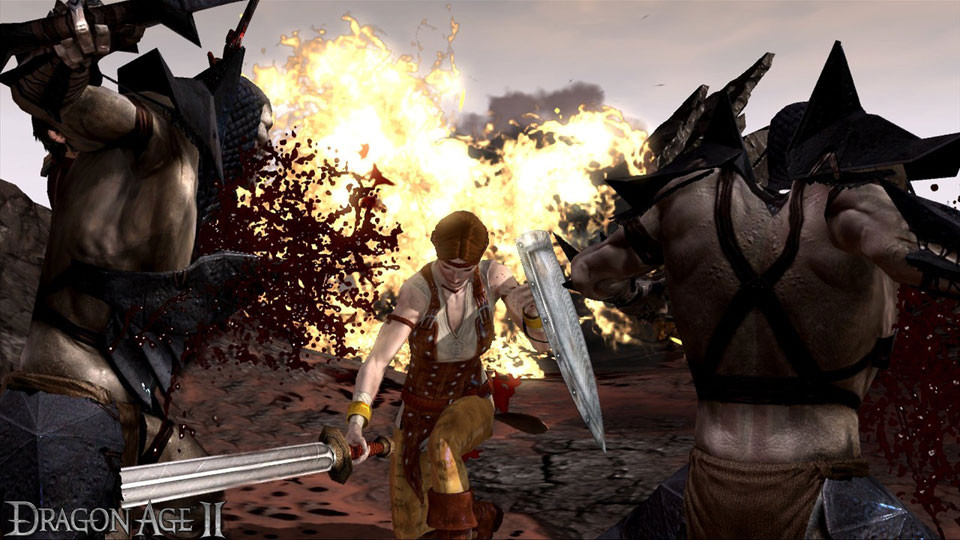
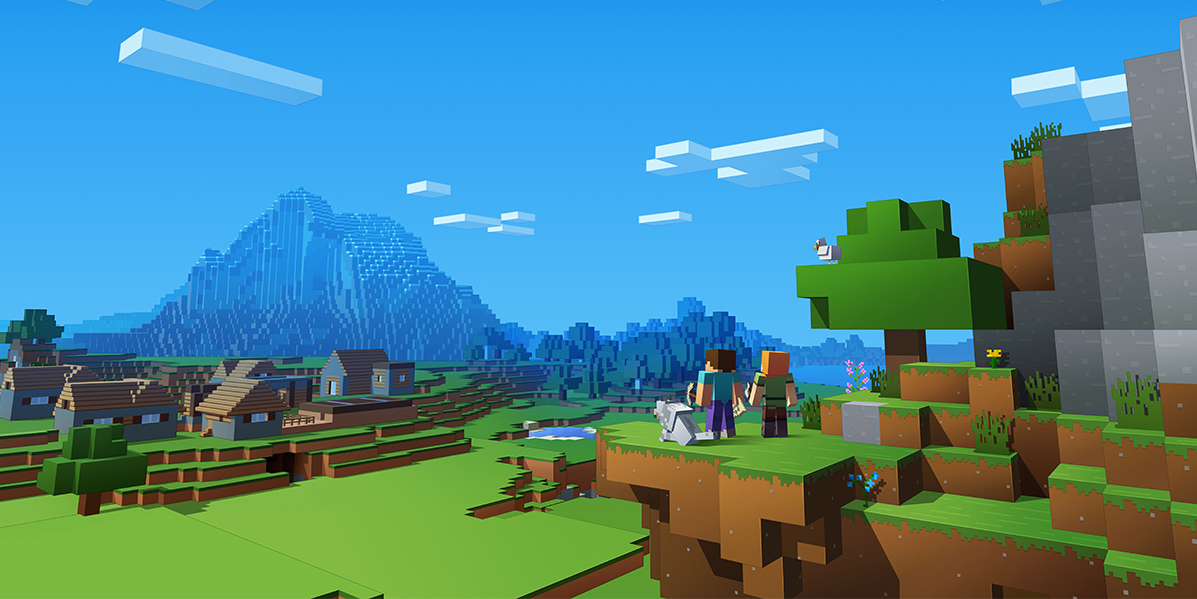
One of the most played games in history is also one of the most written-about, so what more is there to say about Minecraft?
I don't think I will ever stop talking about Minecraft, though, in large part because of its extreme accessibility. More people I know have played Minecraft since its official 2011 release than any other game I can think of, even Mario. I have played Minecraft with children, elderly relatives, friends, and strangers.
Most weekends, my wife and I play Minecraft online with my brother-in-law. Every time, we say we are going to cap our playtime at two or three hours. Every session, we instead play for eight.
I remember the first time I played the game. I was convinced by a friend and colleague to try it. I ended up sending her videos of my creations because I just had to share them with someone. I felt like she had changed my life.
I immediately felt the game tapped into something primal in the human experience: foraging, avoiding predators, building shelters, expressing oneself through art, forming tribes. To me, Minecraft is the most human of all games, despite its blocky aesthetic.
And that shows not in Microsoft's $2.5 billion acquisition but in the fact that for the first time in more than three decades as a gamer, I can connect with almost anyone I meet, gamer or not, over a game.
I believe that there are few bad games; there are only different games made for different people with different tastes. A bad game to one person can be a favorite to another. But Minecraft is the closest I've ever seen to a game that really is for almost everyone.
Minecraft is my game of the decade for the impact it has had on me personally, but I believe a case could be made that it is the game of the decade, full stop. In my view, nothing else has become such a part of the broader culture.
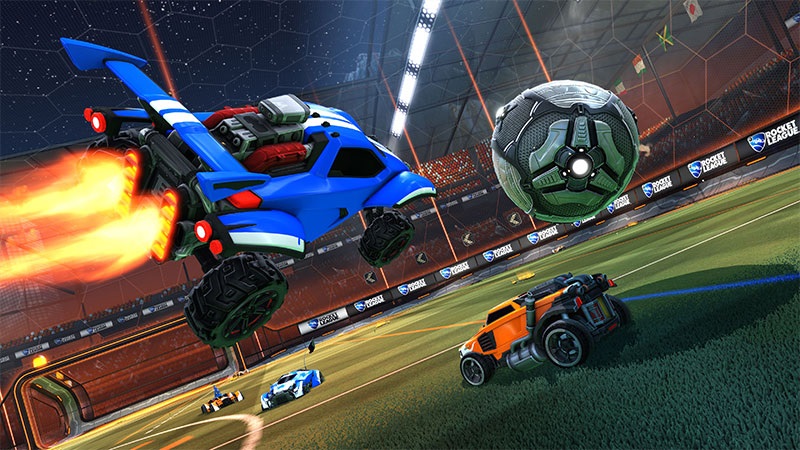
Rocket League has zero bullshit. You are a car, there is the ball, put it in the net. Have a boost meter while you’re at it. And yet here is a game with that Tetris-like quality of doing and evoking more through a simple ruleset than most games can with all the systems and dialogue in the world.
No two games of Rocket League play out the same way. When to be aggressive, when to scramble, when to be defensive, when to be tactical, when to propel skyward, when to spam “Nice one!” joyously or sarcastically for a minute straight—it all morphs based on the moment, and you improvise accordingly. No licensed sports game is less predictable or more engrossing.
None is this accessible, either. There’s the cross-platform compatibility, yes; that’s all great and necessary. But anyone can play Rocket League, because, to quote a famous YouTuber, everyone sucks ass at it. It’s non-gated, lighthearted madness. At the same time, there are layers of depth and subtlety for those who put more into it.
So Rocket League is an impeccable piece of game design. That’s the main reason it deserves to be recognized here. But if we want to look at games through the lens of their healing properties, Rocket League’s charm, replay value, and required focus brought light to some of my darkest stretches this decade. It gave me a body to control, a goal to achieve, and room to move confidently. I’m grateful for it.
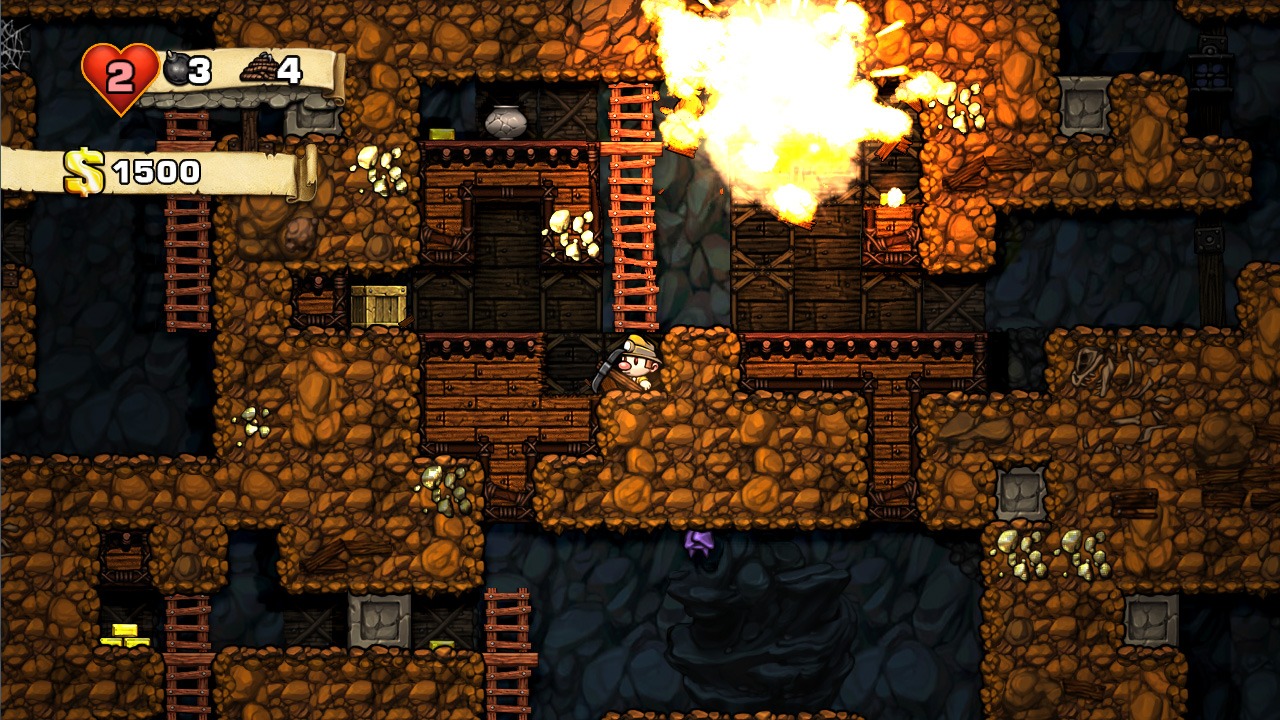
I'm a sucker for a good platform game, but the problem with most examples of the form is that they end, at some point. Once you've beaten the game and found all the secrets, there's limited appeal in just going back and doing it all again (unless you're a speedrunner, perhaps).
Spelunky solves this problem beautifully, bringing the random level generation and ability progression of the "Roguelike" genre to action games in a way that has practically limitless appeal. The way the game carefully remixes its rooms, enemies, and items with each playthrough means no two games of Spelunky are exactly alike, yet every game of Spelunky is also somehow familiar.
Spelunky also endures, for me, because of its punishing but utterly fair difficulty. This is a game where an immensely successful run can end in seconds because of a single careless fall into a spike trap. Yet even at these frustrating, run-ending moments, you always feel that the failure was your fault and not the result of unfair game design. Every hazard is carefully signposted with easy-to-read visuals, and every hazard is easily avoidable if you're careful enough (though figuring out if some potential hidden rewards are worth the associated risks is a constant balancing act).
Though you start over from nothing after each death in Spelunky, you come away with added strategic knowledge and muscle memory that will propel you deeper into the caves in a future run. That's in welcome contrast to many of the decade's biggest games, where constant autosaves mean death is barely a speedbump and progress seems inevitable if you're willing to grind out better weapons or stats.
That makes success in Spelunky all the more meaningful—on the rare occasions it does happen. I have played Spelunky thousands of times. I have beaten Spelunky twice. If that doesn't say something about the game's enduring appeal, I don't know what does. -Kyle Orland
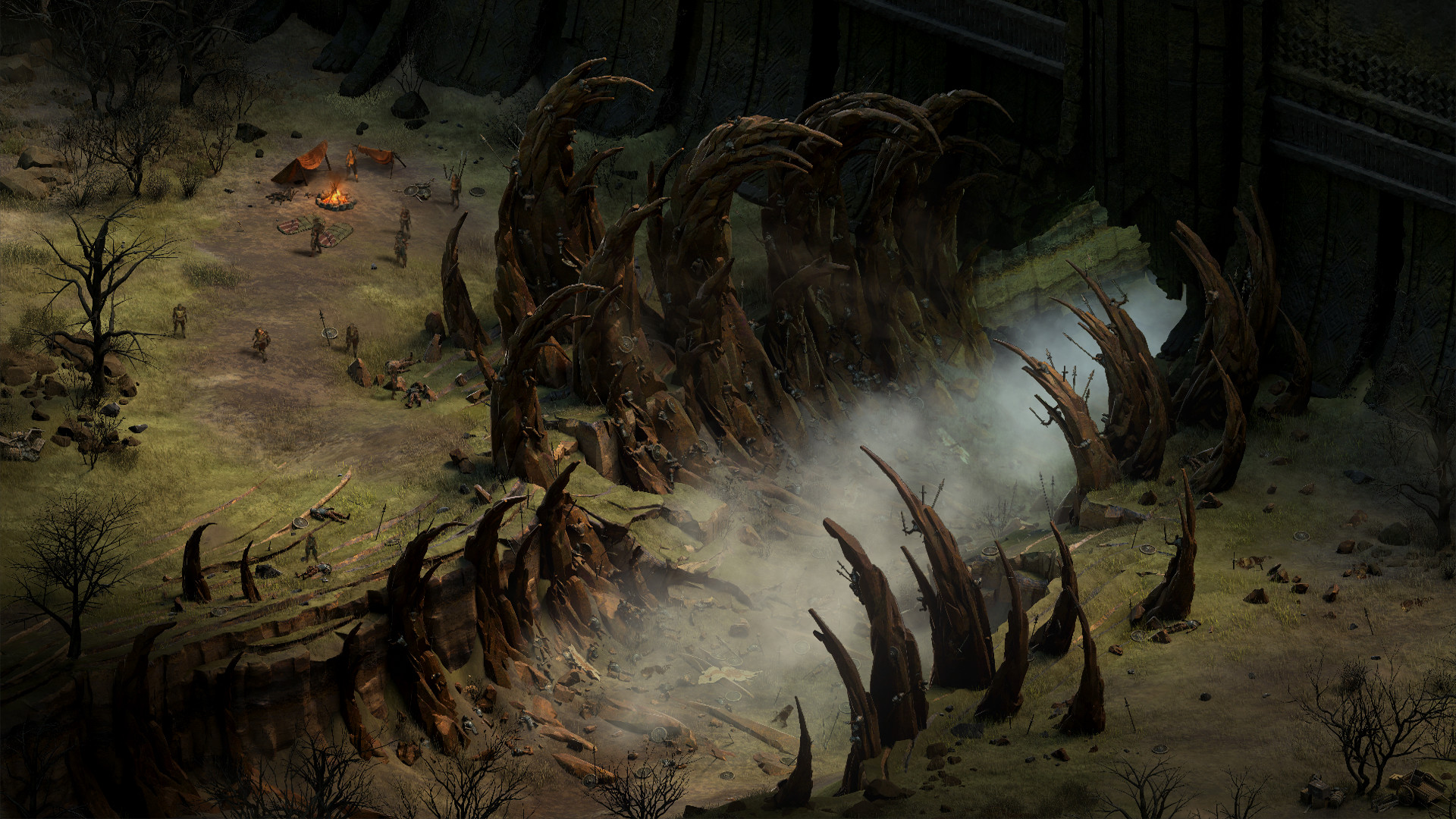
I'm an old-school D&D nerd, so I'm weak to RPGs no matter what. I love the grinding, the leveling, the acquisition of new spells and powers and weapons and the whole lot of it. But a really good RPG has more than that. It has an overarching theme and plot and a feeling of real accomplishment when you finally overcome the "Big Bad."
Tyranny has all those things in spades and offers them up in different flavors depending on what you're in the mood for. It's by no means the first RPG to offer branching storylines and quest paths influenced by the player's decisions. Nor is it the first to lump morality into the mix. But this morality system transcends the usual pass-fail or which-one-did-I-pick options far more compellingly than any other RPG I've played. Like almost any RPG, it's structured around a Hero's Journey—start out relatively young and weak, power up along the way—but you're not necessarily a hero. And even if you are, you might not stay a hero.
There are almost no "easy" morality choices in Tyranny. The world and the storyline you find yourself in are a very hard place to live, and nearly any choice you make will have bad consequences to go along with the good. This is surprisingly freeing—ultimately, you can decide for yourself whether your motivations are "good" or bad; whether you're seeking liberty and chaos or servitude and peace. Are you a Luke Skywalker-type, angry at the evil empire and determined to overthrow it no matter what? Or are you perhaps a tortured Darth Vader-type, in service to what you know perfectly well is a horrible, crushing regime... but looking to bring order to the world and stop this senseless conflict?
I played through both ways, and there were still six or seven more ways to play. It's a hell of a game.
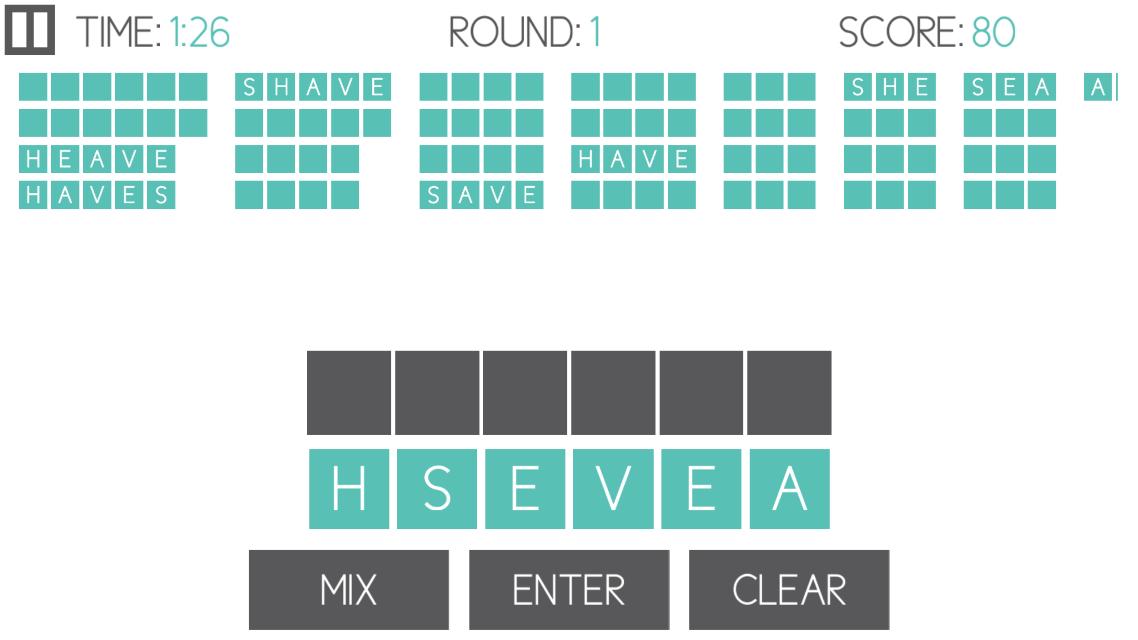
My pick for game of the decade is Spacewolf's Unscramble Anagram from 2015. Of all the free anagram games that were in the Play Store when I got my first smartphone, it had the highest rating. It's basically like Yahoo's Text Twist from the early 2000s. UA is not without flaws—it has ads and won't accept dirty words like "ass," "sex," or "rapist"—but it's an easy way to avoid being alone with my thoughts. And what else am I gonna do? Pay for a game?!? Pffft.
Untitled Goose Game
The trailer for the decade's greatest goose performance.
Sure, sure, every game on this list was undoubtedly great and all. But Untitled Goose Game is the future.
In much the way that Katamari Damacy changed my relationship with console games in the '00s (a relationship that had rotated largely around Halo and other shooters), Untitled Goose Game has changed my relationship with gaming as a whole—perhaps for the next decade.
You may be laughing at me right now, and I don't care.
There are other games I have loved—perhaps a bit too much at times—from the last decade. The reboot of Wolfenstein for its super-noir storytelling through a first-person shooter was compelling, yes. Fallout 3's refresh of the open-world shooter/roleplay system was great and relentless. Titanfall drew me into online gaming in a way that was both compelling and original after I hit burnout with the Halo series. But Untitled Goose Game stands above them all.
Why? Its sheer originality, deceptive simplicity, and lack of pretension—mirrored by its name itself—all make Untitled Goose Game, for me, a paragon of what gaming can be: story-driven fun that is accessible to anyone.The relatable nature of the protagonist, the unnamed white goose, cannot be denied. Goose has launched a million memes for a reason (though Nintendo's built-in social media integration has certainly helped).
The game's innate humor, puzzle-driven plot (if you can call it that), and slow pace make playing it an almost meditative experience. Heart rates lower as the goose wreaks havoc. Minds race as players figure out just exactly how to get all of that woman's washing into the neighbor's fish pond. Zen is achieved as the piano music tinkles quietly.
Untitled Goose Game offers a template for the success of small gaming studios for the next decade. With all the noise in the world, Untitled Goose Game has shown there is demand—nay, a need—for a quiet, slow, semi-open world waterfowl adventure. When I first described the game to my non-gamer wife, she came home the same day with a Nintendo Switch for me—so that we could both play, away from the computer.
The Witness
The island that is The Witness.
If you can find your way to this point on the island’s beach, you still have a real doozy of a puzzle to solve before you can open its door.
One of the game's many, many statues.
You'll remember this treehouse series of puzzles for a long, long time.
You may think this looks like a puzzle spoiler, but you have no idea what puzzles wait within this castle.
Trust me, those panels will light up with puzzles soon enough.
A sneakily taken photo of Sam Machkovech playing a preliminary build of The Witness in 2011.
Chris Hecker
A few of the many pages of notes I took while trying to solve Witness puzzles.
Sam Machkovech
A 2011 concept-art version of The Witness's island. Blow says he figured out its layout early on but worked until as late as this year on where certain kinds of puzzles may land on it.
Some entries on this list came because our staff played them the most. In my case, I followed and stalked my pick the most of any in the 2010s: Jonathan Blow's endlessly delayed puzzle-narrative game The Witness. I first tested the game in 2011, then proceeded to interview its creator multiple times before its launch in early 2016, each time for a different outlet. So just in terms of time and attention, The Witness counts as my pick of the decade.
But there's more. I was fully prepared to shrug off the final product, well aware that delays, hype, and pretension do not necessarily merit praise. The fact that it made this list is largely because I still lose my breath to think about the wonder it inspired, not because it's "just another game from the Braid guy." I'll never forget submerging myself in The Witness' inventive puzzles, its haunting metaphors, its unspoiled surprises, and its shameless admission that, ya know, some of the game's story and setup is masturbatory overkill. That last bit was crucial to leave my positive aftertaste intact—a knowing shrug of the shoulders from a creator who had put his entire creative soul on the line for this digital opus.
We're decades out from the arcade revolution, the home-console rise, the big-budget surge, and the 3D-gaming explosion. Heck, the indie-gaming trend can be pegged more to the late '00s, if you want. The 2010s of gaming, to me, are about the risks afforded to gaming's new generation of auteurs, the ones striking the balance between independence and wisdom to deliver innovative, interactive answers to the deepest questions of life. I love a good pew-pew-pew as much as the next guy, but when I bring up video games at the pub with my 30- and 40-something peers, and explain what brings me back to them as a grown-up, inspirational games like The Witness answer that question the most.
There have been loads of apparent Galaxy S11 leaks, ranging from renders to specifications. Now, the latest rumor points to the 2020 flagships undergoing a name change.
Frequent tipster Ice Universe says the Galaxy S11 is set to be known as the Galaxy S20, claiming that next year marks a “new beginning.”
We haven’t heard any whispers of a name change just yet, and Ice Universe’s posts have been open to interpretation at best before. But the tipster has also made plenty of Galaxy S11 claims before, such as a better 108MP camera and a 48MP 5X zoom sensor. Either way, we’ll need to wait for corroborating sources or official information to find out if the name change is indeed happening.
Editor's Pick
Samsung Galaxy S10 review: Finding the middle ground is hard
The Samsung Galaxy S10, the middle child of the company's flagship series, is a fantastic phone that might easily be lost in the shuffle. Where the Galaxy S10 Plus has been lauded for its large …
The last time a Samsung flagship skipped a number, we got the Galaxy Note 7. But hopefully the Galaxy S11/Galaxy S20 family avoids the same fate.
In any event, we’re expecting the series to offer a Snapdragon 865 or Exynos 990 chipset, a center-mounted punch-hole cutout, and a 108MP main sensor. Other rumored features include no Bixby button or 3.5mm port, and an in-display fingerprint sensor on the Galaxy S11e.
Do you prefer Galaxy S11 or Galaxy S20 as the name for Samsung’s 2020 flagship series? Let us know in the comments!
There have been loads of apparent Galaxy S11 leaks, ranging from renders to specifications. Now, the latest rumor points to the 2020 flagships undergoing a name change.
Frequent tipster Ice Universe says the Galaxy S11 is set to be known as the Galaxy S20, claiming that next year marks a “new beginning.”
We haven’t heard any whispers of a name change just yet, and Ice Universe’s posts have been open to interpretation at best before. But the tipster has also made plenty of Galaxy S11 claims before, such as a better 108MP camera and a 48MP 5X zoom sensor. Either way, we’ll need to wait for corroborating sources or official information to find out if the name change is indeed happening.
Editor's Pick
Samsung Galaxy S10 review: Finding the middle ground is hard
The Samsung Galaxy S10, the middle child of the company's flagship series, is a fantastic phone that might easily be lost in the shuffle. Where the Galaxy S10 Plus has been lauded for its large …
The last time a Samsung flagship skipped a number, we got the Galaxy Note 7. But hopefully the Galaxy S11/Galaxy S20 family avoids the same fate.
In any event, we’re expecting the series to offer a Snapdragon 865 or Exynos 990 chipset, a center-mounted punch-hole cutout, and a 108MP main sensor. Other rumored features include no Bixby button or 3.5mm port, and an in-display fingerprint sensor on the Galaxy S11e.
Do you prefer Galaxy S11 or Galaxy S20 as the name for Samsung’s 2020 flagship series? Let us know in the comments!
:format(webp):no_upscale()/cdn.vox-cdn.com/uploads/chorus_asset/file/19542053/tiktok.png)
:format(webp):no_upscale()/cdn.vox-cdn.com/uploads/chorus_asset/file/19542054/tweetbot.png)
:format(webp):no_upscale()/cdn.vox-cdn.com/uploads/chorus_asset/file/19542055/paprika.png)
:format(webp):no_upscale()/cdn.vox-cdn.com/uploads/chorus_asset/file/19542087/halide.png)
:format(webp):no_upscale()/cdn.vox-cdn.com/uploads/chorus_asset/file/19542091/authy.png)
:format(webp):no_upscale()/cdn.vox-cdn.com/uploads/chorus_asset/file/19542085/lastpass.png)
:format(webp):no_upscale()/cdn.vox-cdn.com/uploads/chorus_asset/file/13172091/akrales_180927_2985_0064.jpg)
:format(webp):no_upscale()/cdn.vox-cdn.com/uploads/chorus_asset/file/9783729/DSCF2501__1_.jpg)
:format(webp):no_upscale()/cdn.vox-cdn.com/uploads/chorus_asset/file/6404477/venmo1_2040.0.jpg)
:format(webp):no_upscale()/cdn.vox-cdn.com/uploads/chorus_asset/file/19542082/photos.png)
:format(webp):no_upscale()/cdn.vox-cdn.com/uploads/chorus_asset/file/19542057/fantastical.png)
:format(webp):no_upscale()/cdn.vox-cdn.com/uploads/chorus_asset/file/19542059/otter.png)